Late in the evening, I often sit at the desk in my apartment study with two slot information screens open side by side. One game draws twenty colored lines over its reels; another simply says “243 ways.” The bright symbols may look similar, but the rules underneath them can be completely different.
Learning how to read slot paylines helps you understand what the screen is showing, how your wager is calculated, and why a particular combination did or did not pay. It does not improve the odds, predict the next spin, or turn a random game into a strategy game. Think of it as learning the scoring system before you play.
Before You Read Slot Paylines, Know the Basic Terms
A traditional online slot displays symbols in a grid. The vertical columns are reels, while the horizontal positions are rows. A five-reel, three-row slot therefore shows fifteen symbol positions after each spin.
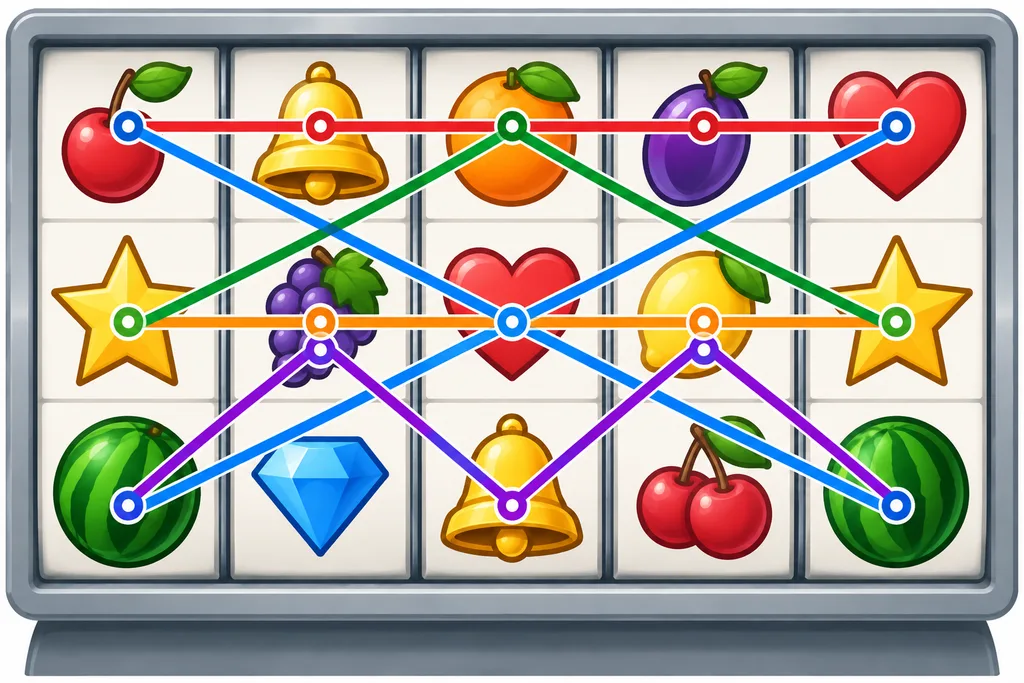
A payline is a game-defined path through selected positions on those reels. Matching symbols on an eligible line may create a win if they satisfy the paytable. Lines can run straight across the middle, diagonally, or in zigzag patterns.
| Term | What it tells you |
|---|---|
| Active paylines | The lines currently covered by your wager |
| Paytable | The slot’s symbol values and exact winning rules |
| Line bet | The amount wagered on each active line, although labels can vary |
| Total bet | The full amount charged for one spin |
| RTP | Theoretical return over a very large number of plays |
| Volatility | A description of the game’s general win-frequency and win-size pattern |
These terms are useful reference points, not universal formulas. Providers and operators sometimes label controls differently, so the paytable and information screen remain the controlling sources for the game in front of you.
Step 1: Open the Paytable and Information Screen
Before pressing Spin, look for an Info, Paytable, menu, or question-mark button. On mobile, it may sit behind a three-line menu. I check this screen even when the reels appear familiar because games with nearly identical layouts can evaluate wins differently.
Record or inspect these details:
- The number of reels and rows
- The number of available or active paylines
- How many matching symbols each prize requires
- Individual symbol payouts
- Wild substitution rules
- Scatter and bonus-symbol behavior
- The required direction and adjacency of wins
- Any rules for stacked symbols, multipliers, or special features

Step 2: Identify the Active Paylines
A payline connects specific symbol positions across the reels. It might use the middle row all the way across, rise from the bottom to the top, or change direction more than once. The line diagram matters more than how close matching symbols appear visually.
Practical explanations of slot paylines and wager displays distinguish fixed lines from games in which you select how many lines are active. The terminology shown by your game should settle any uncertainty.
Fixed Paylines vs Selectable Paylines
With fixed paylines, every listed line is normally active on each paid spin. Changing the wager usually changes the stake level rather than switching lines off.
With selectable paylines, you may choose fewer than the maximum number. A symbol pattern on an inactive line ordinarily does not receive a line payout. Activating more lines also increases the total wager when the amount per line stays unchanged. It does not guarantee that any line will win.
How to Follow a Payline Across the Reels
- Choose one numbered or colored line in the game’s diagram.
- Find its marked position on reel one.
- Trace the path through the indicated position on each later reel.
- Compare the symbols on that path with the paytable.
- Repeat for other active lines rather than combining symbols from unrelated paths.
Step 3: Check Where Winning Combinations Start
Many traditional line slots evaluate matching symbols from the leftmost reel across adjacent reels. For example, the same symbol on reels one, two, and three may qualify, while matching symbols on reels one, three, and four may fail because reel two breaks the sequence.
That pattern is common, but it is not universal. A game may pay from either side, evaluate a specified direction, or use an entirely different mechanic. Never assume that a right-to-left match qualifies because it looks symmetrical. Find wording such as “wins pay left to right,” “adjacent reels,” or “pays both ways” in the rules.
Step 4: Understand Line Bet and Total Bet
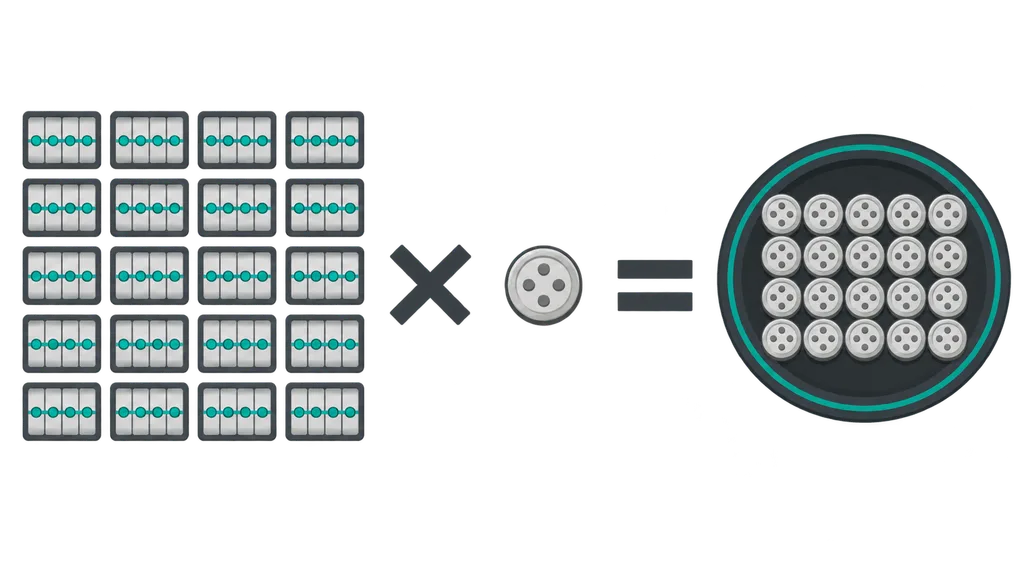
The line bet and total bet answer different questions. The line bet usually indicates how much is assigned to one active line. The total bet is the complete cost of the spin.
| Example component | Amount |
|---|---|
| Active paylines | 20 |
| Bet per line | $0.05 |
| Total bet | 20 × $0.05 = $1.00 |
This is only an example, not a rule for every slot. Some modern games present a single total stake without a separate line-bet control. Others use coins or credits that must be converted into currency.
A displayed paytable prize may also be multiplied by the line bet rather than the entire $1.00 total. Check whether the table lists cash values, credits, or multipliers. Before confirming a spin, change the controls once and watch which figures move; that quick check has helped me catch line-bet displays that were less intuitive than they first appeared.
Step 5: Match the Symbols to the Paytable
Once the reels stop, read the result in the same order as the rules. First locate a valid starting position, then follow adjacent reels along an active line. Finally, compare the number and type of symbols with the relevant paytable row.
Use this checklist:
- Minimum match: Does the symbol require two, three, four, or five appearances?
- Adjacency: Must the matching symbols occupy consecutive reels?
- Symbol value: Does the table show a different award for three, four, and five matches?
- Wilds: Which regular symbols can the wild replace, and are there exceptions?
- Scatters: Do they pay anywhere on the grid, require particular reels, or only trigger a feature?
- Bonus symbols: Do they award money, open a bonus round, or do both?
- Combined wins: Can one symbol participate in several payable lines?
Do not automatically treat wilds and scatters alike. A wild commonly substitutes within a combination, whereas a scatter may be evaluated without following a conventional line. The actual game rules decide both cases.
Step 6: Check How the Game Handles Multiple Wins
One spin can form winning combinations on several active lines. A traditional slot may calculate each valid line separately and add the awards together. Another game may pay only the highest qualifying combination on a line or apply a special rule when multiple features overlap.
Also check whether the slot uses paylines at all. “Ways to win” systems generally evaluate matching symbols on adjacent reels without requiring one predefined path. Cluster games may reward connected groups instead. I treat labels such as 243, 1,024, or “megaways” as a signal to stop tracing lines and read the game-specific evaluation notes.
Step 7: Compare Paylines, RTP, and Volatility Carefully
Paylines describe where qualifying symbols must land. RTP and volatility describe different aspects of the game model. None of the three predicts your next result.
- Paylines: Patterns used to evaluate symbol combinations.
- RTP: A theoretical percentage calculated across extensive play, not a promised return for one person or session.
- Volatility: A broad indication of how win frequency and prize size may be distributed, not a guarantee of a particular experience.
More paylines do not automatically mean better odds or better value. They may simply create more evaluated patterns while increasing the total stake. Compare the complete rules and the wager shown on screen.
Regulatory requirements also depend on jurisdiction. For games offered to players in Great Britain, the UK Gambling Commission explains its testing and RTP-monitoring requirements. That framework should not be treated as proof that every casino worldwide follows the same standards. Check the operator, provider, applicable regulator, and version of the game available to you.
Common Mistakes When Reading Slot Paylines
The mistakes I notice most often are not complicated mathematical errors. They come from skipping one label or carrying the rules of an old game into a new one.
- Confusing line bet with total bet: Confirm the full spin cost before playing, especially after changing the number of active lines.
- Assuming every win starts on the left: Many do, but only the paytable can confirm the direction.
- Ignoring wild and scatter restrictions: A wild may exclude bonus symbols, while scatters may follow separate thresholds.
- Believing more lines guarantee a win: Extra lines create more evaluated patterns, not a promised result.
- Reading meaning into near misses: Symbols landing just above or below a line do not indicate what will happen next.
- Expecting a win after a losing sequence: Previous spins do not make a future win owed. Paylines explain completed results; they do not predict random outcomes.
- Overlooking local rules: Game versions, permitted features, testing requirements, and operator controls can vary by jurisdiction.
- Using autoplay without boundaries: Repeated spins can make both time and total spending harder to track.

Before starting, set a money limit and a time limit that suit your entertainment budget. If the site provides account-level spending caps, use them as an additional safeguard, not a promise that losses cannot occur. Keep autoplay off until you understand the stake per spin, its stop conditions, and the total number of spins selected.
My final check takes less than a minute: open the paytable, identify the win direction, trace one example line, confirm wild and scatter rules, and verify the total bet. If any part remains unclear, use a free-play mode where available or leave the game unopened. Understanding the display is valuable; staying within limits matters more than completing another spin.