It is late in my apartment study, and a slot lobby is glowing with flame icons on one row and blue snowflakes on another. A “hot” badge makes the first games feel active; a “cold” badge makes the others look ready for a rebound. I have seen the same visual nudge while comparing site interfaces after work, and it turns a simple choice into a tempting question: Are slot machines really hot or cold?
For licensed, regulated slots that use random outcomes, the direct answer is no: previous wins and losses do not change the probability of the current spin. “Hot” and “cold” usually describe recent results or a lobby’s chosen reporting window. They are informal labels, not established predictive states. A short session can still feel remarkably generous or painfully harsh. That experience is real, while its value as a forecast is zero. The four beliefs below explain why those streaks feel meaningful and how to make a game choice without pretending to know the next outcome.

Do recent wins give a slot momentum?
A run of payouts can make a game look as if it has found a rhythm. On a standard random slot, that pattern records what has already happened. Each new play creates another random event under the game’s rules and paytable. The result is not rewarded for following a win, and it is not penalized because the previous player collected a bonus.
In plain English, the slot RNG generates a random value or values, and the game maps that input to an outcome allowed by its rules. The screen then presents the result through reel symbols and animations. The UK Gambling Commission’s random-outcome technical standard requires covered RNG results to be acceptably random and unpredictable. It also prohibits adaptive behavior that changes outcome probabilities during play. Those requirements are why a normal winning cluster cannot establish that a regulated random game has switched into a favorable mode.
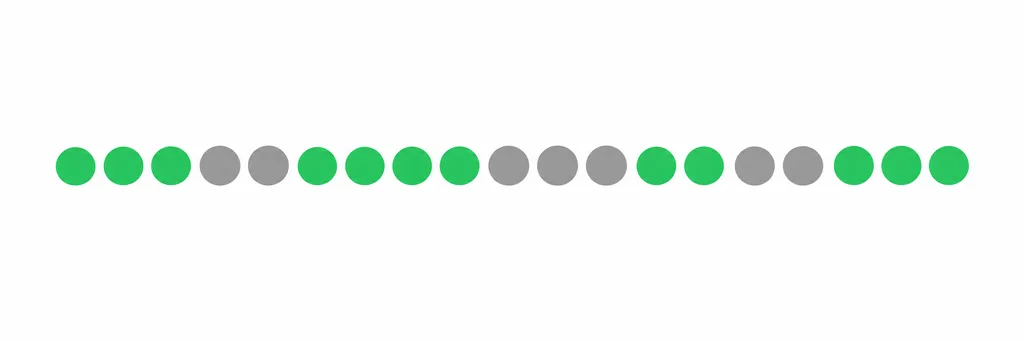
Randomness often looks less tidy than people expect. Imagine recording wins as green dots and losses as gray dots. A truly random line can contain three green dots close together, then a long gray patch. Wins and losses have no duty to alternate. Clusters become especially visible when thousands of people are playing many games, because somebody is likely to encounter an eye-catching sequence.
| Common belief | What the observation shows | Predicts the next spin? |
|---|---|---|
| Several wins mean momentum | A cluster occurred recently | No |
| A long loss run means a win is due | The session has been unfavorable | No |
| Timing or stopping catches a result | The player changed an input or animation | No, on a standard RNG slot |
| A hot/cold badge reveals an edge | A selected history was summarized | No |
Does a cold streak create a win that is due?
The “due to win” idea treats randomness as if it keeps a short-term ledger. After ten disappointing spins, the eleventh can feel obliged to restore balance. Independent spins have no such memory. If the game rules give a particular outcome a fixed probability on an eligible spin, a series of earlier misses leaves that probability where the rules put it. OLG’s player-education material identifies hot/cold streak thinking and due-to-win reasoning as gambling myths, emphasizing that each play is separate from the last.
This is the gambler’s fallacy in everyday form. We expect a small sample to look balanced, even though balance is a long-run statistical idea. A coin can produce several heads in a row without changing the next toss. Slot winning streaks and losing streaks can likewise appear within random play without becoming signals.
RTP causes extra confusion here. Return to player is a theoretical statistical average calculated across a very large number of plays under specified conditions. It is not a personal account, a session target, or a schedule for when wins must arrive. Your session may finish far above or below that figure, especially over a small number of spins.
Staying because a game “owes” you changes the practical risk. Every added paid spin puts another stake into play and creates another possible win or loss. It does not convert earlier losses into an advantage. Once a planned budget has gone, extending the session is chasing a balance the game has no obligation to restore. A progressive jackpot needs similar care: the displayed prize can grow over time, yet that growth alone says nothing about whether recent outcomes changed the probability of winning it. Check the jackpot rules for eligibility and mechanics.
Can timing, tapping, or switching devices catch a hot moment?
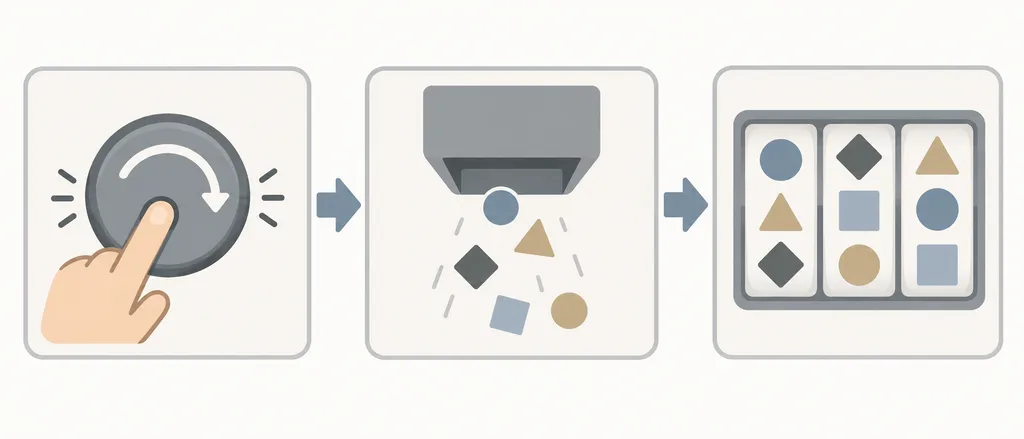
Players sometimes vary the rhythm: wait several seconds, tap spin quickly, change from phone to desktop, reopen the game, or press the stop button at a precise-looking instant. These actions create a strong sense of participation. On standard regulated RNG slots, they provide no reliable method for selecting a winning random result.
The moving reels are a visual presentation of play. A stop control may shorten that presentation and reveal the settled result sooner. It does not improve the result. The Responsible Gambling Council includes this stop-button belief among common gambling myths, which matches what I look for in a help screen: a description of the control, game rules, paytable, and bonus triggers. I never treat the speed of the animation as evidence that symbols can be caught by reflex.
Switching devices or games can change the artwork, stake options, volatility experience, paytable, or available features. That fresh interface may feel like a reset, though it supplies no information about the next independent spin. The sensible exception is whatever the published rules explicitly describe. A pick bonus may ask you to choose, a feature may apply a distinct rule set, and some games include persistent states or collection mechanics. Read what those features actually do. An interactive button should be judged by its disclosed function, with no extra predictive power inferred from its timing.
Do hot and cold indicators reveal an edge?
A lobby dashboard can use genuine data and still have no forecasting value. “Hot,” “cold,” “trending,” “recent winner,” and similar labels may accurately summarize money paid, wins recorded, or activity during a selected window. The history can be correct. For independent random spins, it remains history.
A useful real-world example comes from an Advertising Standards Authority ruling on a Hot or Cold feature. The system classified online casino games using recent money paid relative to money staked. Its data covered the previous three hours and updated every five minutes. The ASA accepted that the display indicated recent performance, then found that it had no bearing on likely future payouts. The advertising created a misleading impression that the feature could affect a player’s chance of success.
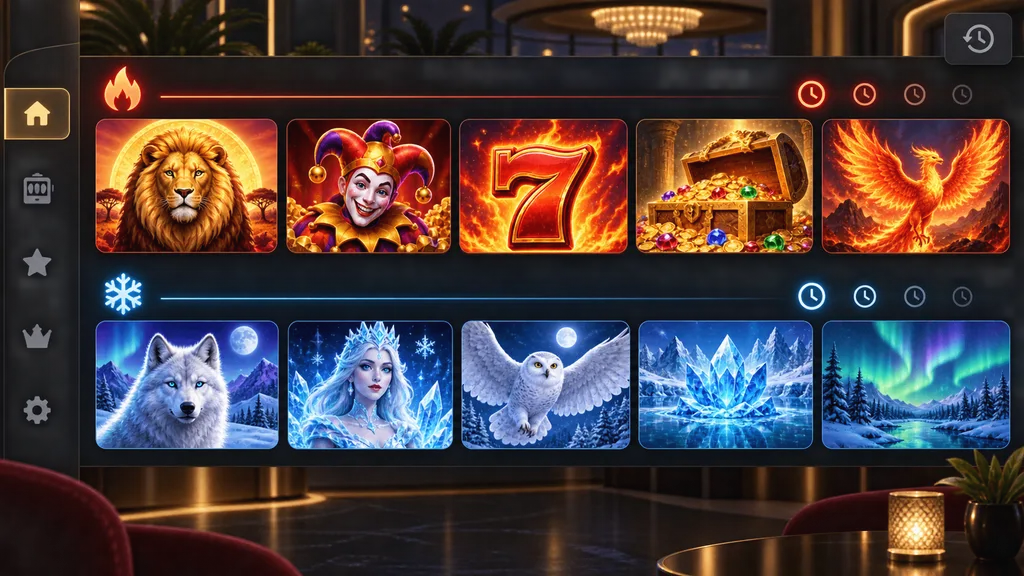
Three presentation details can make a dashboard feel more powerful than it is:
- The sample window: A ten-minute, three-hour, or daily view can classify the same game differently because each window includes different plays.
- Player volume: A busy game generates more observations than a quiet one, so a raw payout or winner count may largely reflect traffic.
- The visual treatment: Flames, snowflakes, movement, and rankings give a backward-looking summary the urgency of a live signal.
The label may omit context such as stake mix, player count, bonus events, and the formula used to define “hot.” Complete context would still describe the selected period. It would not identify the next winning spin. Following the hot list, waiting on a cold game, and moving to a recent winner all make the same unsupported leap from past activity to future probability.
What should you check before choosing a game?
When hot and cold slot machines compete for attention, I use details that can be verified. My after-work check starts with the operator’s licence information, then moves to the game’s help screen. This keeps a vivid short session in perspective and makes the spending decision clear before play begins.
- Verify the licence: Check the named regulator and confirm the operator through its public register where available.
- Read the rules: Review the paytable, eligible stakes, bonus conditions, jackpot terms, and every control’s stated role.
- Use RTP carefully: Treat it as long-run game information, never a promise for tonight’s session.
- Set an entertainment budget: Choose a stake within a preset amount you can afford to spend, with no recovery plan.
- Set a time limit: Decide the stop time in advance and leave when either limit is reached, including during a winning run.
Finally, verify the game category. Machine types and designs vary across jurisdictions. A game may be random, compensated, progressive, finite-pool, or governed by another disclosed mechanism. The UK Gambling Commission separately describes compensated machines whose chances can vary according to previous results; that category does not turn ordinary licensed online RNG slots into trackable hot/cold cycles. Use the rules and regulator information for the specific game in front of you. If those details are unclear, skip the game. Recent results never create a recoverable debt owed to you, and reaching your planned limit is the practical signal that matters.