The desk lamp is on, a generous slot offer fills my laptop screen, and my payment card is still beside the notebook. This is where I pause. A polished banner can wait while I inspect the operator behind it. These 7 Online Slot Site Safety Checks to Complete Before Depositing give you a repeatable way to review evidence before sharing payment details.
Online gambling availability and legality depend on your location, so identify the regulator responsible for your jurisdiction and follow local age rules. Complete every check on the exact site you plan to use. A pass means the evidence matches; caution means you need clarification; a stop signal means you close the page. Never deposit simply to discover whether a questionable site pays.

Your two-minute pre-deposit scan
| Check | Evidence to locate | Warning signal |
|---|---|---|
| 1. Licence | Official register match | Entity or domain differs |
| 2. Domain | Exact URL and valid HTTPS | Warning or redirect |
| 3. Operator | Company, support, complaints | Ownership is unclear |
| 4. Payments | Fees, currencies, fund policy | Off-platform transfer |
| 5. Cash-out | Withdrawal, KYC, bonus terms | Key limits are missing |
| 6. Games | Rules, RTP, provider, testing | Badges lack context |
| 7. Controls | Limits, time-out, exclusion | Tools are inaccessible |
Use this online casino safety checklist as an initial filter, then work through the evidence below. I keep the footer, terms, and regulator register open in separate tabs. That setup makes mismatched names and vague wording much easier to spot.
1. Match the licence in the official register
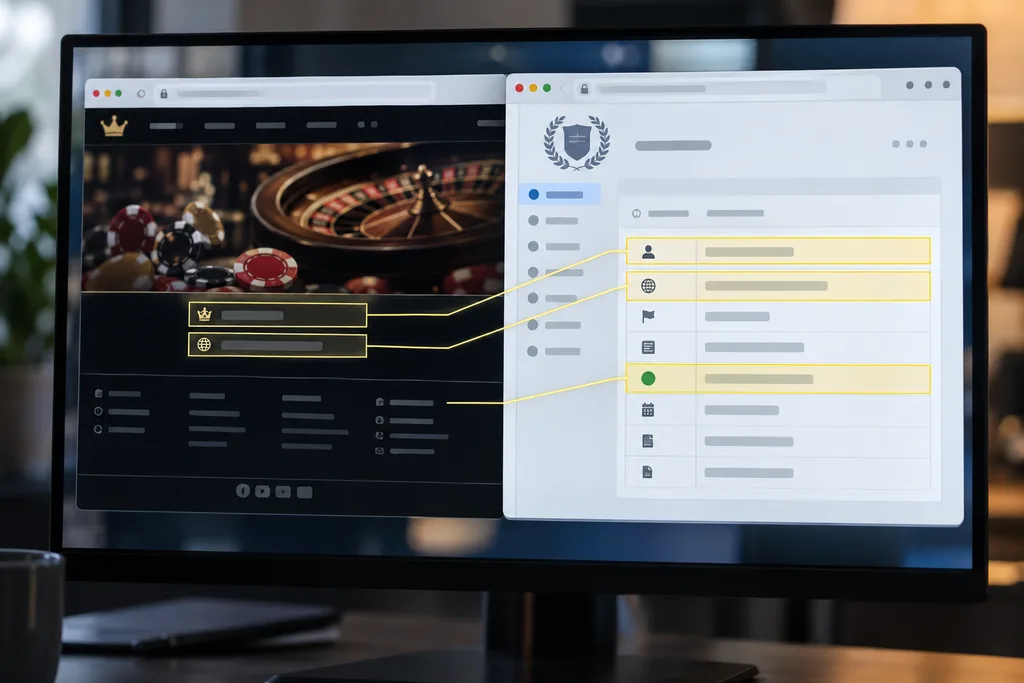
A licence logo gives you a search lead. Verification comes from the regulator’s own records. Find the stated regulator and licence number in the footer, then open the regulator’s website yourself. Search its official register by legal entity, trading name, number, or domain. For example, the UK Gambling Commission public register allows searches by business name, trading name, domain, or account number and can show status and regulatory action.
Compare every material detail: legal company name, exact web address, current status, licensed activity, and applicable location. If the register offers enforcement records, read them in context. MGA-licensed sites should identify the licensee and display the authority’s dynamic seal. Confirm the URL through the MGA register as well.
What to check
- The licence is active and covers online casino or gaming activity.
- The registered domain exactly matches the site in your address bar.
- The legal entity matches the operator named in the terms.
Walk away if: the licence cannot be found, belongs to another company, is suspended or revoked, or lists a different domain. Use only the regulator responsible for your jurisdiction.
2. Inspect the domain and browser connection
Read the full domain character by character. Look for swapped letters, extra hyphens, misleading subdomains, and an unexpected country suffix. Type the known address or follow the URL listed by the regulator where possible. Watch where the page lands after every redirect, especially when opening the cashier.
HTTPS encrypts information moving between your browser and the website. Regulatory legitimacy requires a separate licence check. A padlock cannot tell you whether the operator honors withdrawals, protects player balances, or follows gambling rules. Modern browsers also advise checking the site name even when the connection appears secure.
What to check
- HTTPS remains active on registration, login, and cashier pages.
- The certificate produces no privacy, identity, or danger warning.
- Payment pages use a clearly identified operator or payment processor.
Walk away if: your browser shows a certificate or danger warning, the spelling changes unexpectedly, or a cashier redirects to an unexplained domain. Do not enter personal or card details to investigate further.
3. Trace the company and its accountability path
A credible operator leaves a consistent accountability trail across its footer, terms, privacy notice, and contact pages. Locate the full legal entity, registered or physical address, company details where relevant, and the party responsible for processing personal data. The same entity should make sense alongside the licence record.
Test support before depositing with a neutral question about limits or verification. You are checking whether email, live chat, or telephone access works and whether the reply points to written terms. Then find the formal complaints procedure. It should explain submission, response stages, expected handling periods, and escalation. In Great Britain, an eligible unresolved dispute generally goes through the operator’s complaints process before referral to its named alternative dispute resolution provider. Other jurisdictions use their own procedures.
What to check
- A named legal entity and usable contact channels.
- A privacy notice explaining collection, use, sharing, and retention.
- A written complaint route and named external escalation option where required.
Walk away if: ownership changes between pages, support is unreachable, or the complaints route stays hidden after reasonable searching. Awards and review scores cannot replace a clear accountability trail.
4. Examine deposits and the treatment of player money
Open the banking page and terms before opening an account. Record accepted currencies, deposit minimums and maximums, operator fees, conversion charges, and the name that may appear on your statement. Check whether payment methods must belong to the account holder and whether withdrawals normally return through the original method. Those rules can affect verification and access to funds.
Search for “customer funds,” “insolvency,” and “protection.” In Great Britain, operators must disclose how customer money would be treated if the business became insolvent. Gambling balances do not receive the same protection as money in a personal bank account, and keeping funds separately offers no absolute recovery guarantee. Protections differ elsewhere, so read the disclosure tied to your licence.
What to check
- Available methods, currencies, fees, and transaction limits.
- Card or wallet ownership rules and refund handling.
- A clear customer-funds and insolvency statement.
Walk away if: the site requests a personal crypto-wallet transfer, messaging-app payment, or unrelated bank transfer without a documented cashier process. Unexplained urgency is another firm stop signal.

5. Read withdrawal, KYC, and bonus rules together
This is the longest terms check on my desk, and search-in-page makes it manageable. I search “withdrawal,” “verification,” “wagering,” “maximum bet,” “expiry,” and “cash-out.” Record withdrawal minimums, daily or monthly limits, fees, pending periods, processing windows, and permitted method restrictions. A quoted window describes policy and never guarantees a payout.
Read KYC requirements before sending documents. Identity, age, anti-fraud, and anti-money-laundering checks may involve a passport, driving licence, household bill, selfie, bank statement, or source-of-funds evidence. Document requests alone do not prove misconduct. Timing and requirements vary by operator and jurisdiction. In Great Britain, operators should request information promptly, and reasonably foreseeable checks should occur before the withdrawal stage.
For a bonus, write down the wagering multiplier, qualifying deposit, game contribution rates, excluded titles, maximum eligible stake, expiry, and maximum cash-out. Calculate wagering from the exact base stated in the terms.
What to check
- Separate cash and bonus balances and cancellation rules.
- Document submission channel, review process, and privacy terms.
- All limits that can reduce or delay a withdrawal.
Walk away if: withdrawal terms are missing, material conditions conflict across pages, or support will not clarify them in writing. Skip the bonus when its cost and restrictions remain unclear.
6. Verify game rules, RTP, providers, and testing claims
Open several slots in demo mode where legally available and inspect the information panel. You should be able to find rules, paytable, feature conditions, stake range, and return-to-player information. RTP is a long-run theoretical figure across many plays. Your session can differ sharply, and no return is guaranteed.
Identify the software provider and compare that name with the operator’s published game information. Treat testing logos as claims requiring verification. Note the laboratory and certificate details, then check whether the applicable regulator recognizes that lab or publishes testing requirements. Under UKGC rules for regulated remote games, testing can include RNG documentation and source-code review, statistical analysis, game mathematics, displayed rules, theoretical RTP, and operation in an environment reflecting live use. Other regulators set their own standards.
What to check
- Rules and RTP are accessible before real-money play.
- The provider is identifiable and consistent across the site.
- Testing claims connect to a regulator-approved process or verifiable lab.
Walk away if: core rules are inaccessible, provider names appear invented or inconsistent, or a testing badge has no traceable context. Never use a deposit as a fairness test.
7. Test responsible-play controls and account access
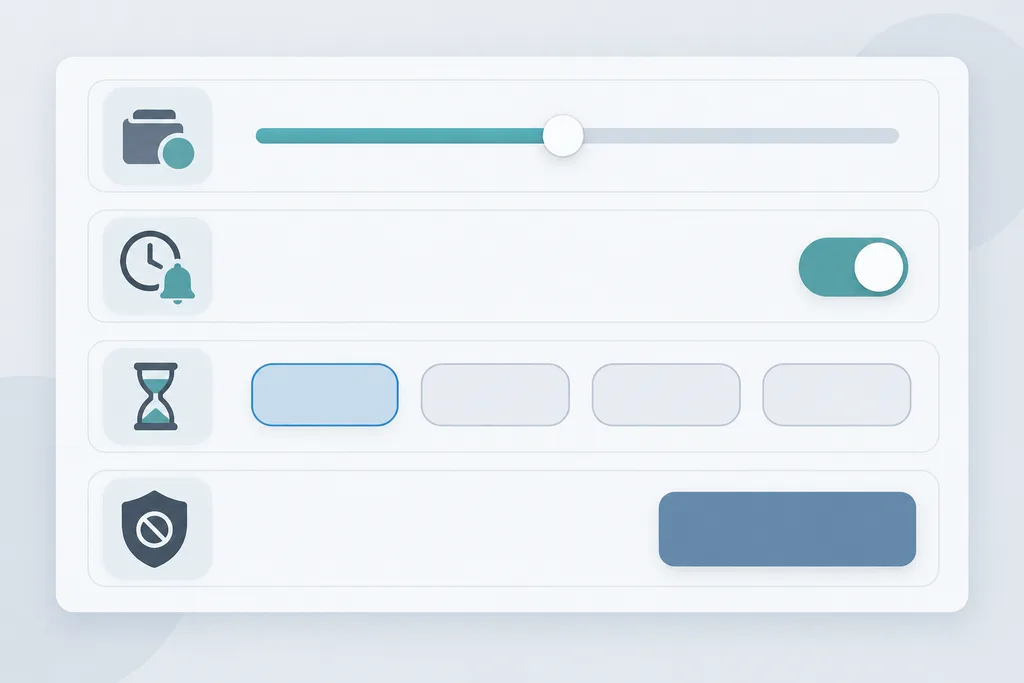
Responsible-play tools should be easy to locate before money enters the account. Check for deposit or wagering limits, loss controls where offered, session reminders, reality checks, cooling-off or time-out options, and self-exclusion. Review how limits take effect, whether increases involve a delay, and how long exclusions last. MGA player-protection requirements, for example, require licensees to provide accessible self-exclusion information and offer deposit or wagering limits during registration or before the first deposit. Rules elsewhere may differ. The MGA player-protection guidance is a useful jurisdiction-specific example.
Also confirm that you can view deposits, withdrawals, wagers, bonuses, and account messages in a usable history. Find the method for closing an account and the links to independent help resources. If you feel unable to control your gambling, stop and use self-exclusion plus local professional support.
What to check
- Set a meaningful deposit limit before the first payment.
- Open the time-out and self-exclusion screens to confirm clear instructions.
- Verify account history, closure steps, support, and complaint access.
Walk away if: limits are cosmetic, self-exclusion is inaccessible, or account records are missing. Deposit only when all seven checks pass, the site is available legally in your location, and the amount fits an entertainment budget you can afford to lose.